5 Best HO Model Train Flex Track Options for Model Railroaders (2026)
Compare five HO model train flex track options by code, rail type and section length to find the right flexible track for your layout. Buyer's guide inside.
 By Caleb Morgan
Updated November 22, 2026
 By Caleb Morgan
Updated November 2026
Flex track is the most flexible tool in an HO layout builder’s kit. Unlike sectional track, which comes in fixed radii and straight lengths, ho model train flex track comes in long, bendable sections that you cut and shape to fit curves, odd corners and custom trackplans. The selection criteria used for this list were rail code and profile, section length, rail material and conductivity, compatibility with common turnouts and roadbed, and the consistency of owner feedback about kinking, alignment and joiner fit. None of these picks were physically tested by the author; the comparison is based on manufacturer specifications and patterns in owner reports.
Our top picks at a glance
- 1TOP CHOICEBest overallWalthers Life-Like Flex Track Code 100 Nickel SilverView on Amazon
- 2
 TOP CHOICEBest for fine-scale modelersAtlas HO Code 83 Super Flex TrackView on Amazon
- 3
 TOP CHOICEBest for reliable Atlas compatibilityAtlas Code 100 Nickel Silver Super-Flex TrackView on Amazon
- 4
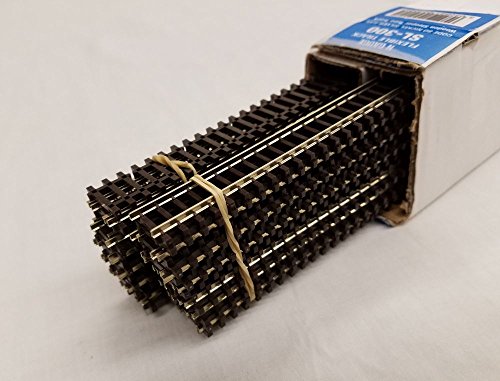 Best budget pickPeco SL-300 Flex TrackView on Amazon
- 5
 Best for expanding an existing starter layoutBachmann E-Z Track Layout Expander SetView on Amazon
Our Top Picks
Quick Comparison
| Product | Best for | Key feature |
|---|---|---|
| Walthers Life-Like Flex Track Code 100 Nickel Silver | Most HO layouts | Code 100 nickel silver rail in 36-inch sections |
| Atlas HO Code 83 Super Flex Track | Fine-scale modelers | Code 83 low-profile rail |
| Atlas Code 100 Nickel Silver Super-Flex Track | Atlas turnout and roadbed users | Code 100 nickel silver with matching Atlas ties |
| Peco SL-300 Flex Track | Budget-conscious builders | Code 80 rail in long bulk sections |
| Bachmann E-Z Track Layout Expander Set | Snap-track fans expanding a layout | Snap-fit steel alloy rail |
Walthers Life-Like Flex Track Code 100 Nickel Silver
Walthers Life-Like Flex Track-36 pkg(5)-Code 100 Nickel Silver 433-3004 HO Scale Model Railroad – Track System
Best for: Most HO layouts that need dependable, general-purpose flex track.
This suits builders who want a single flex track product for mainline curves, yard leads and sidings, and who plan to use standard HO turnouts and common roadbed systems.
Key specs
- Scale: HO
- Rail code: Code 100 (per the listing name)
- Rail material: nickel silver
- Section length: 36 inches, 5-piece package
Pros
- Code 100 rail is widely used with commonly available turnouts and couplers.
- Nickel silver rail is generally noted by owners for conductivity and resistance to tarnish.
- Long 36-inch sections reduce the number of joints needed on straight runs.
Cons
- Code 100 rail looks heavier than Code 83 to fine-scale viewers.
- Like all flex track, sharp radii require careful spiking and roadbed preparation.
Bottom line: A strong first choice for builders who want one flexible track product that works with most HO systems.
View on AmazonAtlas HO Code 83 Super Flex Track
Atlas HO Code 83 Super Flex Track 36" Section ATL500 (5X Pieces)
Best for: Fine-scale modelers who want a lower rail profile.
This is aimed at modelers building detailed layouts where rail height and visual realism matter, especially with Code 83 turnouts and wheelsets.
Key specs
- Scale: HO
- Rail code: Code 83 (per the listing name)
- Section length: 36 inches, 5-piece package
Pros
- Code 83 rail is visually closer to prototype rail proportions.
- Flexible 36-inch sections bend smoothly on gentle and medium radii.
- Pairs well with Code 83 turnouts and wheels on fine-scale layouts.
Cons
- Code 83 wheels and couplers are less universal, so older rolling stock may need wheel changes.
- Smaller rail profile can be more sensitive to alignment and track cleaning.
Bottom line: Best for builders committed to Code 83 who want the finest look available in flex track.
View on AmazonAtlas Code 100 Nickel Silver Super-Flex Track
Code 100 Nickel Silver Super-Flex Track (5/Pk) HO Scale Atlas Trains
Best for: Builders who already use Atlas turnouts and want a matching flex track.
It fits layouts that mix Atlas switches and roadbed, since matching manufacturers often simplifies alignment and joiner fit.
Key specs
- Scale: HO
- Rail code: Code 100 (per the listing name)
- Rail material: nickel silver
- Package: 5 pieces
Pros
- Designed to align with Atlas turnouts and components.
- Nickel silver rail is generally well regarded for electrical performance.
- Super-flex sections bend easily around layout curves.
Cons
- Best value depends on already using the Atlas system.
- Code 100 is less prototypical than Code 83 for fine-scale work.
Bottom line: A logical pick for Atlas-based layouts that need consistent alignment with switches.
View on AmazonPeco SL-300 Flex Track
Peco SL-300 Flex Track 36" Long, N Gauge, Code 80, 25 Peice, Bulk PackF
Best for: Budget-conscious builders who need a lot of track for a larger layout.
This suits modelers who want bulk flex track for long runs and do not mind matching it to a specific rail system. Note that the listing name refers to N gauge in its title, so confirm the gauge and rail code before ordering for HO.
Key specs
- Rail code: Code 80 (per the listing name)
- Section length: 36 inches
- Package: 25 pieces, bulk pack
Pros
- Bulk quantity suits extended mainlines and sidings.
- Code 80 rail is a well-known profile with broad manufacturer support.
- Long sections reduce joints on straight track.
Cons
- The listing title references N gauge, so compatibility with HO must be verified.
- Peco rail and joiners do not always mix cleanly with other brands.
Bottom line: Worth considering for bulk needs, provided you confirm the gauge and joiner system match your layout.
View on AmazonBachmann E-Z Track Layout Expander Set
Bachmann Trains E-Z Track Layout Expander Set Steel Alloy Rail HO Scale | Snap-Fit E-Z Track, Layout Expander Set Add to your existing Starter Set create New Track Configurations, Steel Rail, 44494
Best for: Snap-track users expanding an existing starter layout.
This is a practical option for beginners who already own E-Z Track and want to add new configurations without switching to hand-laid flex track.
Key specs
- Scale: HO
- Track system: snap-fit E-Z Track
- Rail: steel alloy
- Product number: 44494 (per the listing name)
Pros
- Snap-fit design makes assembly quick and requires no spiking.
- Compatible with the E-Z Track system already common in starter sets.
- Good for changing layout configurations without tools.
Cons
- Steel alloy rail is generally less conductive than nickel silver.
- Snap track is not flexible, so it cannot make custom curves.
Bottom line: Best for builders who want the easiest path to expanding a snap-track layout.
View on AmazonFor a broader look at starter options, see 5 Best HO Scale Model Train Sets for Beginners (2026) and Ho Scale Train Track Set: How to Choose and Build a Reliable HO Layout (2026).
Buying Guide
Rail code and profile
Rail code describes the height of the rail. Code 100 is the most common HO profile and works with most commercial turnouts and wheels. Code 83 is a lower, finer profile favored for detailed layouts, but it requires matching wheels and switches. Code 80 is taller and typically used in other scales or older systems. Check your turnouts and rolling stock first, then match the flex track to them.
Good picks for this: Walthers Life-Like Flex Track Code 100 Nickel Silver, Atlas HO Code 83 Super Flex Track
Rail material
Nickel silver rail is widely preferred for its conductivity and resistance to oxidation. Steel alloy rail, common in snap-track systems, is less conductive and more prone to tarnish, so it benefits from regular cleaning. For DCC layouts with reliable pickup, nickel silver is generally the safer choice.
Good picks for this: Atlas Code 100 Nickel Silver Super-Flex Track, Walthers Life-Like Flex Track Code 100 Nickel Silver
Section length and joints
Longer sections mean fewer joints, and fewer joints mean fewer electrical and alignment problems. Thirty-six-inch sections are standard for flex track and reduce the number of joiners you need on straight runs. Each joint is a potential point of misalignment, so plan longer runs where you can.
Good picks for this: Peco SL-300 Flex Track, Atlas HO Code 83 Super Flex Track
Compatibility with turnouts and roadbed
Flex track must match the rail code and joiner system of your turnouts. Mixing brands can cause height differences and poor electrical contact. Before buying, confirm that your switches, crossings and roadbed are designed for the same system, or plan to use transition sections.
Good picks for this: Atlas Code 100 Nickel Silver Super-Flex Track, Bachmann E-Z Track Layout Expander Set
Use case and layout plan
Decide whether you need flex track for custom curves, long straight runs or expanding snap-track. Custom curves and scenic transitions are where flex track shines. For simple loops with standard radii, sectional track may be faster. A trackplan helps you measure how much flex track you will actually need.
Good picks for this: Walthers Life-Like Flex Track Code 100 Nickel Silver, Bachmann E-Z Track Layout Expander Set
Durability and handling
Flex track is shipped in straight sections and kept straight until you bend it. Avoid kinking, and store lengths flat. Owners commonly report that repeated bending weakens rail and ties, so bend carefully and use a bending tool or gentle hand pressure along the length.
Good picks for this: Walthers Life-Like Flex Track Code 100 Nickel Silver, Peco SL-300 Flex Track
Care and maintenance
Clean rail regularly with a track-cleaning block or fine abrasive pad to maintain electrical pickup. Nickel silver resists tarnish better than steel, but it still benefits from periodic cleaning. Keep the track free of dust and debris, which can cause stalling and poor performance.
Good picks for this: Atlas Code 100 Nickel Silver Super-Flex Track, Atlas HO Code 83 Super Flex Track
FAQ
What is ho model train flex track used for?
It is used for custom curves, transitions and long straight runs where sectional track does not fit. You bend it to the radius you need and secure it with spikes or adhesive on a roadbed.
Which rail code should I choose for HO flex track?
Code 100 is the most common and works with most turnouts and wheelsets. Code 83 is a finer profile preferred for detailed layouts, but it requires matching components.
Is nickel silver better than steel alloy rail?
Nickel silver is generally considered better for conductivity and resistance to tarnish. Steel alloy is common in snap-track systems and works well but usually needs more cleaning.
Can I mix flex track from different brands?
It is risky. Rail height, joiner design and tie spacing can differ, leading to misalignment and electrical problems. If you must mix, check the rail code carefully and use transition pieces.
How do I bend flex track without kinking it?
Bend gradually along the length rather than at one point, and use a bending tool or consistent hand pressure. Avoid sharp bends beyond the manufacturer’s minimum radius.
Does flex track need a special roadbed?
Flex track performs best on a firm, level roadbed. Cork or foam roadbed is common, and spikes or adhesive hold the track in place. Check the manufacturer’s recommendations for your system.
How often should I clean flex track?
Clean whenever you notice stalling or poor pickup, and as part of routine layout maintenance. Use a track-cleaning block or fine abrasive pad designed for model railroad rail.
Conclusion
For most HO builders, the Walthers Life-Like Flex Track Code 100 Nickel Silver offers a versatile general-purpose option. Fine-scale modelers committed to Code 83 should look at the Atlas HO Code 83 Super Flex Track, while Atlas-based layouts will benefit from the Atlas Code 100 Nickel Silver Super-Flex Track. Budget-minded builders needing bulk length may consider the Peco SL-300, after confirming gauge and joiner compatibility. Snap-track users expanding an existing layout will find the Bachmann E-Z Track Layout Expander Set the simplest route. Plan your trackplan first, match rail code to your turnouts, and buy the system that fits your existing components.
Sources
- Standards and recommended practices for model railroad track gauges and rail profiles
- Guidance on track construction, joiners and electrical continuity for model layouts
Related reading
About Caleb Morgan
Caleb Morgan is part of our editorial team and reviews and edits our model railroading guides, checking product details against manufacturer specifications and owner feedback.
About the author
Caleb Morgan writes reviews and buying guides for Railroading Online.