6 Best HO Model Train Track Options for Beginners (2026)
Compare the best ho model train track options for beginners, including E-Z track, flex track, expanders and roadbed. See which fits your layout and skill level.
 By Caleb Morgan
Updated November 20, 2026
 By Caleb Morgan
Updated November 2026
Choosing the right ho model train track determines how smoothly your trains run, how easily you can expand a layout, and how much frustration you avoid along the way. This list covers six HO track products that owners and hobby shops commonly recommend, selected for rail quality, ease of assembly, compatibility with standard HO sets, and flexibility for building new configurations. Each pick is based on product listings, brand reputation and common owner feedback rather than hands-on testing.
Our top picks at a glance
- 1TOP CHOICEBest overallBachmann Trains 9" Straight Track 4PK Steel Alloy Rail – Roadbed HO ScaleView on Amazon
- 2
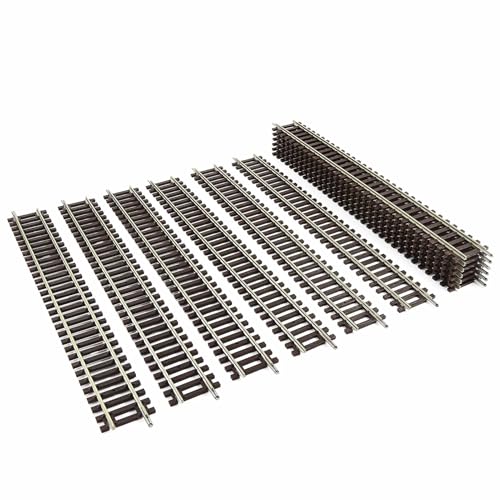 TOP CHOICEBest for code 100 railHO Scale Code 100 Straight Track Copper-Nickel Rail with Joiner (12PCS)View on Amazon
- 3
 TOP CHOICEBest for curved flex layoutsWalthers Life-Like Flex Track 36 pkg Code 100 Nickel SilverView on Amazon
- 4
 Best for expanding a starter setBachmann Trains E-Z Track Layout Expander Set Steel Alloy Rail HO ScaleView on Amazon
- 5
 Best for tight turnsHO Scale Bachmann Steel Alloy EZ Track 12 Pieces of 18" Radius CurvesView on Amazon
- 6
 Best for scenic subbaseHO Track-Bed Roll 24'View on Amazon
Our Top Picks
| Product | Best for | Key feature |
|---|---|---|
| Bachmann 9″ Straight Track 4PK | Beginners building a first oval | Snap-fit E-Z connections |
| HO Code 100 Straight Track | Realistic rail appearance | Code 100 copper-nickel rail |
| Walthers Life-Like Flex Track | Custom curves and yards | Bendable nickel silver rail |
| Bachmann E-Z Track Expander Set | Growing an existing set | Adds new configurations |
| Bachmann 18″ Radius Curves | Wide, smooth mainline turns | 12 pre-formed curves |
| HO Track-Bed Roll 24′ | Laying track over scenery | Continuous roadbed roll |
Bachmann Trains 9″ Straight Track 4PK Steel Alloy Rail – Roadbed HO Scale
Bachmann Trains 9" Straight Track 4PK Steel Alloy Rail – Roadbed HO Scale | Snap-Fit E-Z Track, 9” Straight Track (4/card), Steel Alloy Rail With Black Roadbed, 44411
Best for: Beginners building a first oval or simple loop.
This is a common starting point for families and first-time builders who want track that clicks together without tools. It suits anyone assembling a basic layout from a starter set.
Pros
- Snap-fit connections are quick to assemble.
- Black roadbed helps the track sit neatly on a base.
Cons
- Steel alloy rail is less realistic in appearance than code 100 options.
HO Scale Code 100 Straight Track Copper-Nickel Rail with Joiner (12PCS)
HO Scale Code 100 Straight Track Copper-Nickel Rail with Joiner (Straight Tracks-12PCS)
Best for: Realistic rail appearance on a scale-looking layout.
Modelers who care about how rail looks up close often choose code 100 track, since its lower profile suits HO scenes better than taller rail.
Pros
- Lower rail profile suits detailed scenery.
- Includes joiners for secure connections.
Cons
- Not all older starter sets use code 100 rail, so check compatibility first.
Walthers Life-Like Flex Track 36 pkg Code 100 Nickel Silver
Walthers Life-Like Flex Track-36 pkg(5)-Code 100 Nickel Silver 433-3004 HO Scale Model Railroad – Track System
Best for: Custom curves and yard throats.
Builders who plan their own track plans and want to bend track to fit benchwork tend to prefer flex track over pre-formed sections.
Pros
- Bendable length lets you shape any custom curve.
- Nickel silver rail is widely used for reliable electrical contact.
Cons
- Requires cutting and spiking, which adds time for beginners.
Bachmann Trains E-Z Track Layout Expander Set Steel Alloy Rail HO Scale
Bachmann Trains E-Z Track Layout Expander Set Steel Alloy Rail HO Scale | Snap-Fit E-Z Track, Layout Expander Set Add to your existing Starter Set create New Track Configurations, Steel Rail, 44494
Best for: Growing an existing starter set into a bigger layout.
Owners who already have a basic oval often add this expander set to create sidings, crossovers and new loop shapes without buying a full new set.
Pros
- Compatible with the same E-Z track system as most starter sets.
- Adds variety to layout configurations.
Cons
- Limited to the track pieces included, so larger expansions need more purchases.
HO Scale Bachmann Steel Alloy EZ Track 12 Pieces of 18″ Radius Curves
HO Scale Bachmann Steel Alloy EZ Track 12 Pieces of 18" Radius Curves for Model Railroad Trains
Best for: Wide, smooth mainline turns.
Larger 18-inch radius curves let longer equipment, including many modern diesels and passenger cars, run with less strain than tight curves allow.
Pros
- Wider radius reduces derailment risk on long cars.
- Twelve pieces make a substantial curved section.
Cons
- Large radius requires more floor or benchwork space.
HO Track-Bed Roll 24′
HO Track-Bed Roll, 24'
Best for: Laying track over a scenic subbase.
Track bed gives ballast a stable foundation and reduces noise, which matters for layouts built on tables or shelves.
Pros
- Long continuous roll covers large areas quickly.
- Helps track sit level and stay anchored.
Cons
- Needs to be cut and fitted, so plan the layout before rolling it out.
Buying Guide
Rail Material and Track Code
Steel alloy rail is common in snap-together starter track and is durable and budget-friendly, while nickel silver and copper-nickel rail generally conduct electricity better and hold a clean finish longer. Most HO track in this list is Code 100 rail, which is the standard profile for HO scale, so make sure any track you buy matches the other track and wheels you plan to use.
Track System Compatibility
Snap-fit systems connect quickly without tools and work well with each other, which is ideal for beginners building a first oval or figure-eight. Standard track sections (such as code 100 straight pieces with joiners) can be mixed with other brands if the rail profile matches, so check that before combining products from different makers.
Flexibility for Custom Layouts
Fixed-length sections limit your options, but flex track lets you bend roadbed and rail into curves, transitions, and turnouts that fit your space. If you plan to design an original layout rather than follow a pre-set plan, prioritize flexible track or a track bed roll that you can cut to length.
Expansion and Curve Options
Expander sets and pre-formed curves make it easy to grow a starter layout without buying everything at once. Check the radius of any curves you buy, because tighter radii can cause longer cars and locomotives to look out of place or bind on sharp turns.
Quantity and Planning Ahead
Buy enough track to close your loop with room to spare, and consider packaged bundles if you are building a complete layout from scratch. Counting pieces before you buy helps you avoid extra trips to the hobby shop mid-project.
FAQ
Is steel alloy track good enough for beginners?
Yes, steel alloy track is widely used in starter sets and is easy to snap together and reconfigure. It is a practical choice for learning the hobby, and you can upgrade specific sections later if you want smoother electrical performance.
What does Code 100 mean?
Code 100 refers to the height of the rail, and it is the most common standard for HO scale model trains. Matching rail code is important so that wheels sit properly and trains roll without derailing.
Can I mix different brands of HO track?
Often you can, as long as the rail code and track gauge match, but connections between different track systems may not always be perfectly aligned. Test a joint before committing to a full layout to make sure the wheels pass smoothly across it.
Do I need flex track or pre-formed sections?
Pre-formed sections are quicker to set up and good for simple loops, while flex track gives you more freedom to create custom shapes. Many builders use both, starting with pre-formed pieces and adding flex track for unique curves and spurs.
What is a track-bed roll used for?
A track-bed roll provides long lengths of roadbed that you can cut and lay under your rail to create a realistic base. It is useful for custom layouts and gives a more finished look than bare track on a board.
Conclusion
Beginners who want a quick, easy starter loop should look at the snap-fit straight track, the expander set, or the pre-formed curves, since these connect without tools and grow with your layout. Those who plan a custom design or want a more finished, scale-accurate look should consider the Code 100 track with joiners, flex track, or a track-bed roll.
Choose a steel alloy snap-fit system for simplicity and budget, or a nickel silver or copper-nickel option if you value cleaner electrical contact and a longer-lasting finish. Matching your choice to your space, budget, and layout goals will make the hobby more enjoyable from the first run.
Related reading
- Model Train Track Planning: A Step-by-Step Guide for Beginners
- Model Train Track Planner: How to Design a Layout Before You Buy Track
- Model Train Track Layouts: 6 Steps to Plan Your First Layout
- Model Train Track Gauges Chart: Scales, Sizes and How to Pick One
- Top 5 HO Scale Model Train Freight Cars with Reliable Performance
- Top 3 Walker Models Model Train Buildings for HO Scale Layouts
About Caleb Morgan
Caleb Morgan is part of our editorial team and reviews and edits our model railroading guides, checking product details against manufacturer specifications and owner feedback.
About the author
Caleb Morgan writes reviews and buying guides for Railroading Online.