5 Best Pullman Standard Freight Cars for Model Railroaders in 2026
Compare 5 pullman standard freight cars for model railroading, from a 1900–1960 reference book to HO and O gauge models, with specs, pros, cons and buying tips.
 By Miles Sinclair
Updated November 8, 2026
 By Miles Sinclair
Updated November 2026
Pullman standard freight cars were among the most common freight equipment on North American railroads for much of the twentieth century, and that history makes them a natural subject for model railroaders. Whether you want a prototype reference, an HO flatcar for a branch-line siding, or an O gauge covered hopper for a display layout, the right choice depends on your scale, your era and how much detail you need. This list compares five products using manufacturer specifications, brand reputation and common owner feedback, with the selection criteria explained below.
Our top picks at a glance
- 1TOP CHOICEBest overallPullman-Standard Freight Cars, 1900-1960View on Amazon
- 2
 TOP CHOICEBest for HO modelers who want a flatcarWalthers Mainline 910-5392 HO Scale 60' Pullman-Standard Flatcar – ReaView on Amazon
- 3
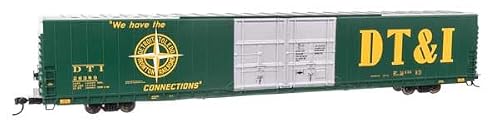 TOP CHOICEBest for HO intermodal and boxcar fansWalthers Proto 920-102116 HO Scale 86' Pullman-Standard Double-Door HiView on Amazon
- 4
 Best for O gauge hopper collectorsLionel Illinois Central 4740 PS-2CD Covered Hopper #765280 O Gauge 2642262View on Amazon
- 5
 Best for a bulkhead flatcar projectWalthers Mainline 910-5857 HO Scale 60' Pullman-Standard Bulkhead FlatView on Amazon
Our Top Picks
The table below summarizes the five products. Read the individual sections for the full picture, and check the scale and road name of each model against your layout before buying.
Quick Comparison
| Product | Best for | Key feature |
|---|---|---|
| Pullman-Standard Freight Cars, 1900-1960 | Prototype research and reference | Historical reference covering the Pullman-Standard car line |
| Walthers Mainline 910-5392 HO Scale 60′ Flatcar | HO flatcar fleets on mainline layouts | Ready-to-run 60-foot Pullman-Standard flatcar, BNSF livery |
| Walthers Proto 920-102116 HO Scale 86′ Hi-Cube Boxcar | HO boxcar consists with a regional road look | 86-foot double-door hi-cube boxcar, Detroit, Toledo & Ironton livery |
| Lionel Illinois Central 4740 PS-2CD Covered Hopper | O gauge collectors and display layouts | O gauge covered hopper in Illinois Central livery |
| Walthers Mainline 910-5857 HO Scale 60′ Bulkhead Flatcar | Bulkhead flatcar loads and lumber-style scenes | Pullman-Standard bulkhead flatcar, BNSF livery |
Pullman-Standard Freight Cars, 1900-1960
Pullman-Standard Freight Cars, 1900-1960
Best for: Prototype research and reference
This is a reference book rather than a model, which makes it a useful starting point before you buy or build any Pullman-style car. Modelers planning an era-correct fleet, or anyone trying to match dimensions and details, will find it valuable. It also helps you understand how the car lines developed over six decades.
Key specs:
- Subject: Pullman-Standard freight car designs, roughly 1900 to 1960
- Format: printed reference volume
Pros:
- Covers a long production period in one place
- Useful for matching era, car type and dimensions
- Helps with road and lettering research
Cons:
- It is not a model, so you still need a kit or ready-to-run car
- Coverage of individual modelers’ needs, such as decal sheets, is limited
Bottom line: Pick this if you want historical accuracy before spending money on rolling stock. It pairs well with any of the models below.
View on AmazonWalthers Mainline 910-5392 HO Scale 60′ Pullman-Standard Flatcar – Ready to Run – BNSF #584966
Walthers Mainline 910-5392 HO Scale 60' Pullman-Standard Flatcar – Ready to Run – BNSF #584966
Best for: HO flatcar fleets on mainline layouts
This ready-to-run HO model suits modelers who want a finished flatcar without a kit build. It fits well into a BNSF-themed freight train or a mixed consist on a mainline or yard scene.
Key specs:
- Scale: HO (1:87)
- Length: 60 feet (prototype)
- Ready to run, BNSF #584966 road number
Pros:
- Ready to run, so it is quick to add to a train
- The 60-foot length matches common prototype flatcars
- Works with standard HO track and couplers
Cons:
- Road-specific livery limits its use on other railroads without repainting or decals
- Owners sometimes recommend checking couplers and wheel gauge on arrival
Bottom line: A solid choice for HO modelers who want a dependable flatcar for a BNSF or general mainline consist.
View on AmazonWalthers Proto 920-102116 HO Scale 86′ Pullman-Standard Double-Door Hi-Cube Boxcar – Ready to Run – Detroit, Toledo & Ironton #26389
Walthers Proto 920-102116 HO Scale 86' Pullman-Standard Double-Door Hi-Cube Boxcar – Ready to Run – Detroit, Toledo & Ironton #26389
Best for: HO boxcar consists with a regional road look
The double-door hi-cube boxcar is a distinctive Pullman-Standard body style, and this model suits modelers building a freight yard or a regional railroad with a mix of boxcars. Its tall profile adds visual variety next to shorter cars.
Key specs:
- Scale: HO (1:87)
- Length: 86 feet (prototype)
- Body style: double-door hi-cube boxcar
- Ready to run, Detroit, Toledo & Ironton #26389
Pros:
- Hi-cube profile adds variety to a boxcar fleet
- Ready to run, with a clear regional road identity
- Good match for consists that need longer cars
Cons:
- The longer body may need checking on tight curves
- Limited to one road name, so a varied fleet needs more purchases
Bottom line: Choose this if you model a regional road or want a visually distinctive boxcar in your HO fleet.
View on AmazonLionel Illinois Central 4740 PS-2CD Covered Hopper #765280 O Gauge 2642262
Lionel Illinois Central 4740 PS-2CD Covered Hopper #765280 O Gauge 2642262 | Train Car
Best for: O gauge collectors and display layouts
This O gauge covered hopper is aimed at collectors and modelers with larger layouts or display shelves. The Illinois Central livery gives it a strong historical identity, and it fits well into a postwar-style freight consist.
Key specs:
- Scale: O gauge
- Car type: covered hopper
- Illinois Central livery, road number 765280
Pros:
- Strong visual fit for O gauge freight trains
- Historic Illinois Central identity
- Suits display and collecting as well as operation
Cons:
- O gauge needs more space than HO or N, which may rule it out for small layouts
- Owners often mention checking the coupler height against other cars in the train
Bottom line: The right pick for O gauge modelers who want a covered hopper with Illinois Central character.
View on AmazonWalthers Mainline 910-5857 HO Scale 60′ Pullman-Standard Bulkhead Flatcar – Ready to Run – BNSF #545005
Walthers Mainline 910-5857 HO Scale 60' Pullman-Standard Bulkhead Flatcar (48' IL) – Ready to Run – BNSF #545005
Best for: Bulkhead flatcar loads and lumber-style scenes
The bulkhead flatcar is a useful car for lumber, pipe or steel loads. This HO model suits modelers who want a variant of the flatcar, with the bulkhead ends that define the type, for a more varied freight train.
Key specs:
- Scale: HO (1:87)
- Length: 60 feet (prototype)
- Car type: bulkhead flatcar, 48-foot inside length (prototype, IL)
- Ready to run, BNSF #545005 road number
Pros:
- Bulkhead ends give a distinct look next to standard flatcars
- Ready to run for quick use
- Good for lumber or pipe load projects
Cons:
- Load-securing details may need added detail or scratch-built loads
- Road-specific livery limits its use on other railroads
Bottom line: A good add-on for HO modelers who want a bulkhead flatcar to balance a flatcar and boxcar fleet.
View on AmazonBuying Guide
Scale and gauge
Before comparing models, confirm your layout scale. HO (1:87) is the most common scale for mainline and branch-line layouts, while O gauge needs much more space. Mixing scales in one train is not practical, so match everything to your track.
Good picks for this: Walthers Mainline 910-5392 HO Scale 60′ Pullman-Standard Flatcar; Lionel Illinois Central 4740 PS-2CD Covered Hopper
Prototype accuracy and era
Pullman-Standard built cars across many decades, so the body style, roof, and details should suit the era you model. Use a reference such as the Pullman-Standard book before buying, especially if you model a specific year.
Good picks for this: Pullman-Standard Freight Cars, 1900-1960; Walthers Proto 920-102116 HO Scale 86′ Pullman-Standard Double-Door Hi-Cube Boxcar
Car type and length
Flatcars, boxcars, hoppers and bulkhead flatcars look very different and serve different loads. Consider how your yard and sidings handle lengths, and whether longer cars such as 86-foot boxcars will clear your curves and turnouts.
Good picks for this: Walthers Mainline 910-5857 HO Scale 60′ Pullman-Standard Bulkhead Flatcar; Walthers Proto 920-102116 HO Scale 86′ Pullman-Standard Double-Door Hi-Cube Boxcar
Ready to run versus kit
Ready-to-run cars save build time and suit operators who want to run trains quickly. Kits reward builders who enjoy detailing and custom weathering. Decide how much time you want to spend before you commit to a model.
Good picks for this: Walthers Mainline 910-5392 HO Scale 60′ Pullman-Standard Flatcar; Walthers Mainline 910-5857 HO Scale 60′ Pullman-Standard Bulkhead Flatcar
Road name and livery
Road-specific liveries such as BNSF, Illinois Central, or Detroit, Toledo & Ironton give a clear identity but limit where the car fits. Plain or generic liveries are more flexible. Think about the railroad you model before buying.
Good picks for this: Lionel Illinois Central 4740 PS-2CD Covered Hopper; Walthers Proto 920-102116 HO Scale 86′ Pullman-Standard Double-Door Hi-Cube Boxcar
Couplers, wheels and running quality
Check coupler type and height, and confirm wheel gauge against your track. Owners often recommend inspecting new cars for coupler alignment and smooth rolling before adding them to a long train.
Good picks for this: Walthers Mainline 910-5392 HO Scale 60′ Pullman-Standard Flatcar; Walthers Proto 920-102116 HO Scale 86′ Pullman-Standard Double-Door Hi-Cube Boxcar
Care and durability
Store cars in a dust-free case or box, keep them away from direct sunlight, and handle them by the body rather than the couplers or details. Plastic detail parts can break, so careful handling extends the life of any model.
Good picks for this: Pullman-Standard Freight Cars, 1900-1960; Lionel Illinois Central 4740 PS-2CD Covered Hopper
FAQ
What does Pullman-Standard mean for model railroaders?
Pullman-Standard was a major North American railcar builder, and its freight car designs appeared on many railroads across several decades. Model railroaders use the name to find cars that match real equipment from that era and manufacturer.
Which scale is best for Pullman-Standard freight cars?
HO is the most widely available scale for Pullman-style models and suits most mainline and branch-line layouts. O gauge models are also available and suit larger layouts and display shelves. Choose the scale that fits your space and track.
Do I need a reference book before buying?
It is not required, but a reference such as the Pullman-Standard volume helps with era, body style and dimensions. It is especially useful if you want an accurate fleet for a specific year.
Are ready-to-run models suitable for beginners?
Yes. Ready-to-run cars need no assembly and can be placed on track quickly. Beginners should check couplers and wheel gauge on arrival, then test each car on their own track before running long consists.
How can I tell which road name to choose?
Pick a road that operated in your modeled region and era. Research on the railroad’s history and freight traffic can help. Remember that a single road name limits where a car fits, so mix liveries if your layout covers multiple railroads.
Can I combine different car types in one train?
Yes, most freight trains mix flatcars, boxcars and hoppers. Keep cars of the same scale together, check coupler heights, and vary the consist to match the traffic your railroad would carry.
Conclusion
For prototype research, the Pullman-Standard reference book is the best starting point. For HO flatcars, the Walthers Mainline 910-5392 suits mainline fleets, while the Walthers Proto 920-102116 hi-cube boxcar adds visual variety to a boxcar consist. The bulkhead flatcar, the Walthers Mainline 910-5857, is a good add-on for lumber and pipe loads. For O gauge collectors, the Lionel Illinois Central covered hopper is the most distinctive option here. Match your choice to your scale, era and road name, and you will get a fleet that suits your layout.
Sources
- Standards and recommended practices for model railroad scales, gauges and track work
- Historical railroad and freight car records in the Library of Congress collections (loc.gov)
Related reading
- Wooden Railway Freight Cars: A Step-by-Step Guide for Model Railroaders
- Why Do Micro-Trains N Scale Freight Cars Derail? 6 Causes and Fixes
- Why Are O Gauge Freight Cars Worth Collecting? 6 Reasons and Tips
- What Are the Types of Freight Cars? A Model Railroader's Guide
About Miles Sinclair
Miles Sinclair is part of our editorial team and reviews and edits our model railroading guides, checking product details against manufacturer specifications and owner feedback.
About the author
Miles Sinclair writes reviews and buying guides for Railroading Online.