Soldering Model Train Track: 6 Best Tools and Kits for Beginners (2026)
Learn how soldering model train track works, what to look for in tools and track kits, and compare six picks for HO and O gauge layouts before you buy.
 By Caleb Morgan
Updated November 22, 2026
 By Caleb Morgan
Updated November 2026
Soldering model train track is one of those skills that separates a layout that runs for years from one that stalls at the first dead section. Most modern track is sold pre-assembled, but feeder wires, rail joiners and track-to-track bonds still depend on a clean, solid electrical joint. This guide compares six options that help hobbyists with those connections, judged on electrical reliability, ease of use for beginners, compatibility with common HO and O gauge track systems, and the degree to which owners report trouble-free results.
Our top picks at a glance
- 1TOP CHOICEBest overallLionel Ready-to-Play 12-Piece Curved Model Train Track Pack, BlackView on Amazon
- 2
 TOP CHOICEBest for solder-free wiringHO Scale Track Power Feeders 5 Pair Pre-Wired Rail Joiners Code 100/83View on Amazon
- 3
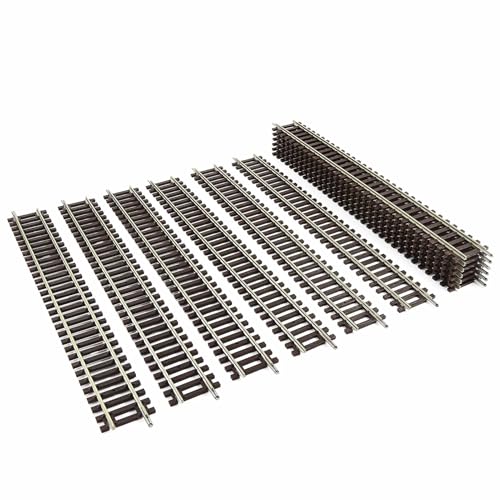 TOP CHOICEBest for HO Code 100 expansionHO Scale Code 100 Straight Track Copper-Nickel Rail with JoinerView on Amazon
- 4
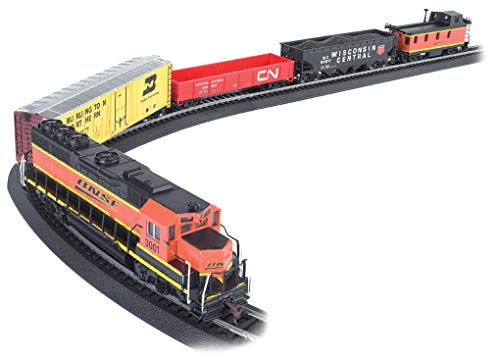 Best for a complete starter layoutBachmann Trains Rail Chief Ready to Run Electric Train Set, HO ScaleView on Amazon
- 5
 Best for switching controlWalthers Controls Layout Control System Vertical-Mount Switch Machine 942-101View on Amazon
- 6
 Best budget pick for O gaugeLionel O Gauge FasTrack 10 Inch Straight Four Piece Track PackView on Amazon
Our Top Picks
The table below summarizes what each product is meant to do. Read the individual sections for specifications and trade-offs.
| Product | Best for | Key feature |
|---|---|---|
| Lionel Ready-to-Play 12-Piece Curved Model Train Track Pack, Black | Complete curves without joints | Pre-assembled curved sections |
| HO Scale Track Power Feeders 5 Pair Pre-Wired Rail Joiners Code 100/83 | Solder-free feeder wiring | Pre-wired leads, no soldering needed |
| HO Scale Code 100 Straight Track Copper-Nickel Rail with Joiner | Adding HO straight sections | Copper-nickel rail with joiners |
| Bachmann Trains Rail Chief Ready to Run Electric Train Set, HO Scale | Beginners building a first loop | 130-piece all-in-one set |
| Walthers Controls Layout Control System Vertical-Mount Switch Machine 942-101 | Automating turnouts | Vertical-mount switch machine |
| Lionel O Gauge FasTrack 10 Inch Straight Four Piece Track Pack | Low-cost O gauge expansion | Four-piece straight track pack |
Lionel Ready-to-Play 12-Piece Curved Model Train Track Pack, Black
Lionel Ready-to-Play 12-Piece Curved Model Train Track Pack, Black
Best for: Complete curves without joints
This pack suits builders who want to close a loop quickly and avoid making their own track-to-track connections. It is a good match for a first oval or a display circle that does not need precise hand-built geometry.
Key specs
- 12 pieces of curved track in one pack
- Black finish, designed for Lionel-compatible connections
Pros
- No soldering needed to complete a curved run
- Consistent radius across sections
- Easy to expand with compatible straight track
Cons
- Fixed radius limits layout design options
- Best suited to Lionel-style systems rather than mixed layouts
Bottom line: A strong pick for beginners who want a complete loop without learning to solder track joints.
View on AmazonHO Scale Track Power Feeders 5 Pair Pre-Wired Rail Joiners Code 100/83
HO Scale Track Power Feeders 5 Pair Pre-Wired Rail Joiners Code 100/83 | 5 pairs of pre-wired HO rail joiners for Code 100/83 track; 8-inch red and black leads; no soldering required
Best for: Solder-free feeder wiring
These pre-wired joiners are aimed at modelers who find soldering feeders to rail intimidating or who want a repeatable connection method. They are designed for Code 100 and Code 83 HO track.
Key specs
- 5 pairs of pre-wired rail joiners
- Compatible with Code 100/83 HO track
- 8-inch red and black leads
Pros
- No soldering required for feeder connections
- Color-coded leads simplify polarity
- Useful for adding power drops to existing track
Cons
- Limited quantity for large layouts; more pairs may be needed
- Connections still need firm mechanical seating to stay reliable
Bottom line: Ideal for HO builders who want clean feeder wiring without learning to solder rail.
View on AmazonHO Scale Code 100 Straight Track Copper-Nickel Rail with Joiner
HO Scale Code 100 Straight Track Copper-Nickel Rail with Joiner (Straight Tracks-12PCS)
Best for: Adding HO straight sections
This straight track pack is meant for extending an HO layout. Copper-nickel rail is widely used because it resists oxidation better than plain brass in many environments, which helps conductivity over time.
Key specs
- Code 100 rail profile for HO scale
- Copper-nickel rail material
- Pack of 12 straight pieces with joiners
Pros
- Joiners speed up assembly
- Copper-nickel rail is commonly reported to hold a clean surface
- Consistent profile for mixing with other Code 100 track
Cons
- Joints still benefit from a bonding wire for best electrical continuity
- Requires careful alignment to avoid bumps at joints
Bottom line: A practical choice for HO modelers extending an existing Code 100 layout.
View on AmazonBachmann Trains Rail Chief Ready to Run Electric Train Set, HO Scale
Bachmann Trains Rail Chief Ready to Run Electric Train Set, HO Scale | Complete 130 Piece Set; Locomotive, Rolling Stock, Track, Power Pack and Speed Controller, Build Your Model Railroad, #706
Best for: Beginners building a first loop
This set bundles a locomotive, rolling stock, track, a power pack and a speed controller. It suits someone who wants to run trains immediately and learn track wiring from a working baseline.
Key specs
- 130-piece complete set in HO scale
- Includes locomotive, rolling stock, track and power pack
- Model number 706
Pros
- Everything needed to run trains out of the box
- Good reference for how track sections connect
- Expandable with additional Bachmann track
Cons
- Track sections are fixed-radius and limit layout shape
- Power pack quality is basic compared with later DCC systems
Bottom line: The right pick for someone who wants a complete starter set before tackling custom track work.
View on AmazonWalthers Controls Layout Control System Vertical-Mount Switch Machine 942-101
Walthers Controls Walthers Layout Control System-Vertical-Mount Switch Machine 942-101 Any Scale Model Railroad – Track System
Best for: Automating turnouts
Once you have track laid, a switch machine lets you throw turnouts from a panel rather than by hand. This vertical-mount model is designed for layouts of any scale and fits under-benchwork mounting.
Key specs
- Vertical-mount switch machine
- Walthers Layout Control System compatible
- Designed for any scale model railroad track system
Pros
- Clean operation from a control panel
- Vertical mounting suits tight benchwork spaces
- Part of a wider system for expansion
Cons
- Requires wiring and mounting time for each turnout
- Adds cost per turnout on larger layouts
Bottom line: Best for modelers ready to automate turnouts once track is down and wired.
View on AmazonLionel O Gauge FasTrack 10 Inch Straight Four Piece Track Pack
Lionel O Gauge FasTrack 10 Inch Straight Four Piece Track Pack
Best for: Low-cost O gauge expansion
FasTrack uses a snap-together design, so connections are made without soldering. This pack provides four straight sections, useful for extending an O gauge loop or building a siding.
Key specs
- 10-inch straight sections
- Pack of four pieces
- O gauge FasTrack system
Pros
- Snap-together joints need no soldering
- Simple to add or remove sections
- Works well alongside other Lionel track
Cons
- Limited to Lionel-compatible layouts
- Four straight pieces are not enough for a complete loop alone
Bottom line: A sensible choice for O gauge builders who want to expand a layout without learning to solder.
View on AmazonBuying Guide
Track system and gauge compatibility
Before buying any track or accessory, confirm the scale (HO, N or O) and the rail profile. Code 100 and Code 83 are the most common HO profiles, and mixing them creates visible gaps and poor electrical contact. Check the scale-and-gauge reference in the Model Train Gauges Chart: Scales, Sizes and How to Pick One before you commit.
Good picks for this: HO Scale Code 100 Straight Track Copper-Nickel Rail with Joiner; Lionel O Gauge FasTrack 10 Inch Straight Four Piece Track Pack
Solder-free versus soldered connections
Soldered joints are the traditional standard because they give the most durable electrical path. Pre-wired joiners and snap-together systems trade some long-term robustness for speed and ease. Many modelers combine both: solder critical feeders and use joiners for ordinary rail joints.
Good picks for this: HO Scale Track Power Feeders 5 Pair Pre-Wired Rail Joiners Code 100/83; Lionel O Gauge FasTrack 10 Inch Straight Four Piece Track Pack
Feeder placement and power distribution
Electrical resistance grows with distance, so place feeders every few feet of track, especially on long straight runs and at turnouts. Many builders add feeders at the start of each block and at the end of long sidings. Keep feeder leads short and use consistent wire gauge.
Good picks for this: HO Scale Track Power Feeders 5 Pair Pre-Wired Rail Joiners Code 100/83; Bachmann Trains Rail Chief Ready to Run Electric Train Set, HO Scale
Rail material and durability
Nickel-silver and copper-nickel rails resist tarnish better than plain brass in most environments. Tarnished rail causes stalling and erratic running. Plan to clean rail periodically with a track-cleaning block rather than relying on the initial finish.
Good picks for this: HO Scale Code 100 Straight Track Copper-Nickel Rail with Joiner; Lionel Ready-to-Play 12-Piece Curved Model Train Track Pack, Black
Turnouts and switching
Each turnout creates extra joints, and frog wiring must be handled carefully to avoid short circuits. Automated switch machines reduce hand-throw wear but add wiring. Decide early whether you want manual or powered turnouts, since it changes how you plan feeders.
Good picks for this: Walthers Controls Layout Control System Vertical-Mount Switch Machine 942-101
Layout planning and track geometry
Plan track radius and section lengths before cutting or joining anything. Sketching on graph paper or using a track planner helps prevent awkward joints and clearance problems. A layout planned on paper rarely needs as many corrections later.
Good picks for this: Bachmann Trains Rail Chief Ready to Run Electric Train Set, HO Scale; Lionel Ready-to-Play 12-Piece Curved Model Train Track Pack, Black
Care and maintenance
Clean rail regularly with a non-abrasive track cleaner, keep dust covers over the layout when not running, and inspect joints for loosening. Recheck feeder connections after temperature changes, since expansion and contraction can loosen mechanical joints over time.
Good picks for this: HO Scale Track Power Feeders 5 Pair Pre-Wired Rail Joiners Code 100/83; HO Scale Code 100 Straight Track Copper-Nickel Rail with Joiner
FAQ
Do I need to solder model train track?
Not always. Snap-together systems and pre-wired joiners can make reliable connections without soldering. Soldered joints and feeders are still the most durable option for permanent layouts, especially in HO and N scale where rail joints are close together.
What is the difference between a feeder and a rail joiner?
A rail joiner mechanically and electrically connects two pieces of track end to end. A feeder is a wire that carries power from the controller to the rail at a specific point. Feeders are needed even when joiners are used, because joiners alone can develop resistance over time.
How many feeders does a layout need?
There is no fixed number, but many builders add feeders every few feet of track and at the ends of long runs. Longer distances and heavier current demands call for more feeders. Test with a meter and add feeders wherever voltage drops noticeably.
Can I mix Code 100 and Code 83 track?
Mixing rail profiles is not recommended because the rail heights differ, which causes wheel bumps and poor electrical contact at joints. Choose one profile for a layout and stick with it, or use transition track where necessary.
Should I use a bonding wire at every rail joint?
Many modelers add bonding wires at key joints to improve conductivity, especially in long runs. Joiners alone usually work, but bonding wires give more reliable electrical continuity over the life of the layout.
How do I clean track before soldering?
Clean the rail with a track-cleaning block or fine abrasive pad, then wipe with denatured alcohol. A clean, bright surface takes solder far more reliably than oxidized rail. Always work with adequate ventilation when using solder and flux.
Conclusion
For most beginners, the strongest starting point is the Bachmann Rail Chief set, since it provides a complete working baseline. Modelers who want to avoid soldering entirely will find the pre-wired HO feeder joiners and the Lionel FasTrack pack the most direct options. Builders extending existing HO Code 100 track should look at the copper-nickel straight pack, while those automating turnouts will want the Walthers switch machine. The Lionel curved pack is a convenient way to close a loop. Match your choice to your scale, your comfort with soldering and your long-term layout plan.
Sources
- Recommended practices and standards for model railroad wiring, track gauges and electrical connections
- Workplace guidance on soldering fumes, ventilation and safe handling of flux and solder (osha.gov)
- Consumer safety information on electrical components and small parts in hobby products (cpsc.gov)
Related reading
- Model Train and Track: 5 Best Picks for Beginners and Layouts (2026)
- Model Train Track Planning: A Step-by-Step Guide for Beginners
- Model Train Track Planner: How to Design a Layout Before You Buy Track
About Caleb Morgan
Caleb Morgan is part of our editorial team and reviews and edits our model railroading guides, checking product details against manufacturer specifications and owner feedback.
About the author
Caleb Morgan writes reviews and buying guides for Railroading Online.